
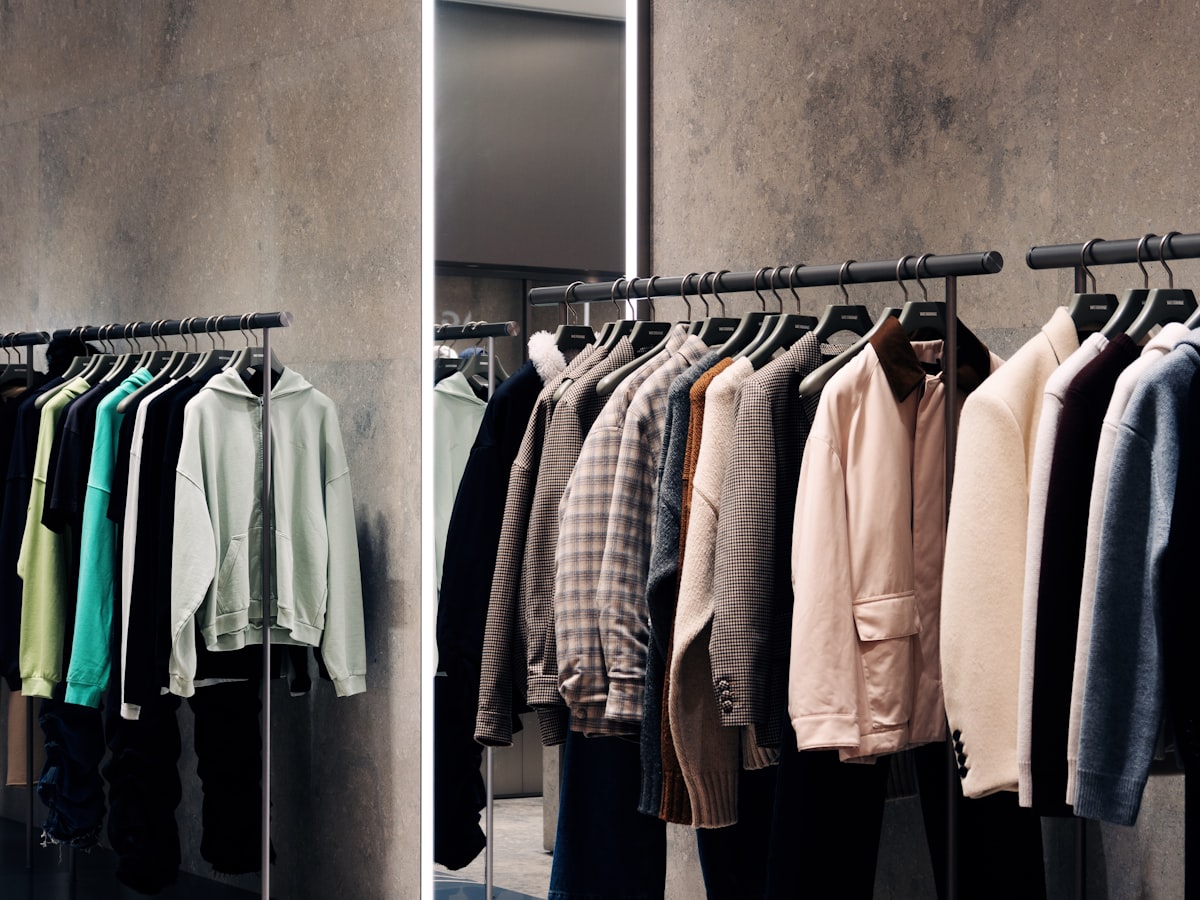
A full closet should feel like freedom. But for many people, it feels like pressure. The familiar phrase "I have nothing to wear" does not usually mean no clothes. It means no clear choice, no calm option, no obvious path forward.
For an AI styling brand, that is the real insight: the issue is not always quantity. It is quality of decision-making.
When more choice makes you feel less confident
Psychologists call the phenomenon where abundance backfires choice overload. In a classic study by Iyengar and Lepper, people were more attracted to a large display of 24 jars of jam, but they were three times more likely to actually buy when presented with only 6 options. More choice created more interest but less action.
That logic applies directly to wardrobes. When the closet is full of overlapping, similar, or only partly right pieces, the brain has to work harder before it can even begin choosing. Instead of making a decision, it stalls. Instead of feeling free, it feels overwhelmed.
The fatigue of choosing what to wear
Outfit paralysis also feeds on decision fatigue - the gradual decline in self-control and decision quality that happens after many small choices. Getting dressed may seem like a single decision, but it is actually a sequence: What category? What color? What fits the weather? What fits the occasion? What fits how I feel?
Each of these micro-decisions draws on the same limited pool of mental energy. When the closet is large and disorganized, that sequence becomes longer and more taxing - before the day has even started.
Why clothing choices feel high-stakes
There is a reason that choosing an outfit feels more stressful than choosing what to have for breakfast. Clothing is social. It communicates identity, professionalism, mood, and group membership. Research consistently shows that people form rapid impressions based on clothing - impressions that feel difficult to correct once formed.
That underlying social pressure means that outfit decisions carry real emotional weight. A wrong choice can feel like a statement. A right choice can feel like armor. That is not vanity. That is a well-documented psychological dynamic that makes getting dressed one of the most emotionally loaded small tasks in daily life.
The paradox of the full wardrobe
One of the counterintuitive findings in wardrobe research is that people with larger wardrobes do not necessarily get dressed more easily. In many cases, the opposite is true. More pieces create more permutations, more comparisons, and more second-guessing.
This is especially true when the wardrobe lacks coherence - when it is a collection of individual purchases rather than a curated set of pieces that work together. Without a clear organizing principle, every outfit attempt becomes a small creative project that many people do not have the time or energy for first thing in the morning.
What happens when the choice is simplified
When the complexity is removed - when someone is shown a clear, curated option that fits their body, suits their occasion, and aligns with their personal style - something significant changes. The decision stops being a problem and starts being a moment of self-expression.
AI styling works by collapsing the decision tree. Instead of navigating dozens of possibilities, the person is presented with a recommendation. That recommendation does not eliminate their agency - it focuses it. And focused choice is far easier than open-ended browsing through a full wardrobe.
The confidence that follows clarity
One of the less-discussed benefits of simplified outfit decisions is what happens after the choice is made. When someone gets dressed without the usual anxiety and second-guessing, they tend to feel more settled and confident entering the day.
Research on enclothed cognition shows that when people feel good about what they are wearing, they perform better on tasks requiring focus and confidence. The right outfit does not just look good. It changes how someone carries themselves.
Closing thought
Outfit paralysis is not a superficial problem. It is a daily friction point that drains energy, creates anxiety, and starts the day on a note of uncertainty rather than intention.
AI styling does not just help people get dressed. It helps them get dressed well, quickly, and without the weight of endless options. That is a meaningful difference in how a day begins.